Evidence Based


 Updated on:
16.08.2025
Updated on:
16.08.2025
 5 min read
The Anxiety and Depression Association of America reports that social anxiety disorder, the second most prevalent anxiety condition, affects 15 million adult Americans . Overwhelming dread and feelings of embarrassment or humiliation in public or on social media are characteristics of this illness.
Extreme self-consciousness and a dread of receiving unfavorable feedback from others are two symptoms of social anxiety. In social contexts, those who suffer from this fear may feel as if they are being observed, assessed, analyzed, or condemned. Usually, it first becomes noticeable in adolescence.
Two categories of social phobias are identified by the Diagnostic and Statistical Manual of Mental Disorders (DSM-5): generalized social anxiety, which is the dread of all social settings, and specific social anxiety, which is the fear of particular circumstances.

Here are a few of the most typical reasons why people have social anxiety disorders
Typical signs of social anxiety disorder include the following:
1. Symptoms pertaining to emotions, behavior, and cognition
2. Somatic Symptoms
The following are somatic indicators of social anxiety disorder:
A lump in the throat (globus feeling), dry mouth and throat, or trouble swallowing
A sense of detachment from oneself (depersonalization) or of unreality (derealization)
The worry that one may lose control or act in a manner that will be degrading or embarrassing
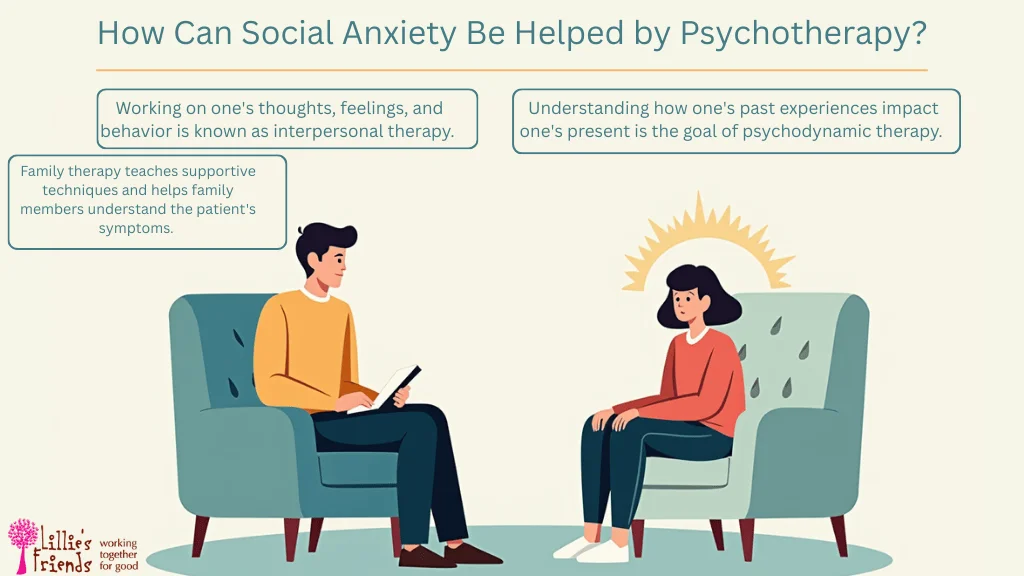
Therapy for social anxiety typically falls into two main categories:
1. Counseling
The goal of psychotherapy is to assist the patient in recognizing and altering their emotions, ideas, and behaviors. Individual or group treatment sessions are available for patients. Through psychotherapy, they learn more efficient coping mechanisms for the symptoms. It could include studying stress management or relaxation methods for social anxiety.
Cognitive-behavioral therapy (CBT) Patients with anxiety disorders may learn new thought patterns via cognitive behavioral therapy.
The aim is for patients to see themselves less as passive objects of circumstance and more as active participants in their lives. Aside from CBT, some of the greatest types of psychotherapy are as follows:
2. Drugs
Treatment for social anxiety disorders involves a number of drugs, but not before a social anxiety disorder test. These may aid in symptom management and improve a patient’s comfort level in social settings such as the workplace and classroom.
The doctor will weigh the advantages and disadvantages of each course of therapy before determining if medicine is the best option. Examples of these include
Although social anxiety disorder may be very crippling for those who experience it, individuals can heal and get over this disease with the right care. Anyone who thinks they may have social anxiety disorder needs to talk to their doctor and get the support and assistance they need. After receiving a diagnosis, a patient may manage their symptoms with a variety of treatments, allowing them to lead normal lives.