Evidence Based


 Updated on:
22.08.2025
Updated on:
22.08.2025
 7 min read
Everybody wants to concentrate on the important things in life, feel more balanced and at peace, and be happy. To do this, mindfulness training might be beneficial.
This discipline involves living in the present moment without making judgments. An attitude like this increases consciousness and facilitates bias-free decision-making.
The best part is that practicing mindfulness doesn’t require spending a lot of time sitting cross-legged like a monk. Beyond the confines of a meditation place, anybody can practice mindfulness to improve focus. It’s a great way for those with hectic schedules to get access to them anytime and anywhere. Let’s study mindfulness and its application in greater detail!
Supplementing treatment for anxiety , stress, sleeplessness, or depression may benefit from mindfulness. For those who just lack pleasure, it is also an excellent answer.
The secret is to identify a special, straightforward technique that works with day-to-day existence. Here are five strategies that you could find useful:
Mind wandering and judgmental tendencies are fairly frequent. To become proficient in mind concentration methods, one must first learn to accept and be patient with these ideas. Show sympathy. Show kindness.
Accepting and fully focusing on every thought is the goal of mindfulness meditation. This facilitates observing what is going on right now. As you refocus, provide compassion and understanding to each wandering idea.
Here’s how it functions:
When you are having trouble focusing or feeling overwhelmed throughout the day, continue to check in with your intentions and your bodily sensations.
People’s brains are said to function 95% automatically. Neural networks, or the subconscious brain, which form shortcuts for effective functioning in a chaotic environment, are the foundation of all human behavior and habits.
By default, the neurons compel an individual to revert to their well-established, dependable old routines. However, awareness stops automatic processes and makes room for new ones. The want to form new habits and the desire to stick with the ones that are comfortable may often clash, leading to autopilot. However, as regular repetition is the foundation of any behavior, mindfulness may also develop into a routine habit.
You may teach your brain to create new patterns in a variety of ways by practicing mindfulness. Through the following mindfulness exercises, anybody may achieve this:
There are many possibilities for such activities as you walk. They may be used by people when they go to and from the store or their vehicle, go for quick walks in the neighborhood or to the gym, or go mountaineering.
A thoughtful stroll is deliberate, slow, and aware. It involves being mindful of everything around us, including the beauty of nature, as well as noises, fragrances, the ground, and skin sensations. Experience the stages, their sensations, and the vibrations they produce.
When people are walking mindfully and with no specific destination in mind, they are more productive. They have no intention of going somewhere; they are simply going for a stroll.
Running or working out vigorously at the gym might be beneficial mindful exercises. Rather than focusing just on weight loss or physical appearance, gym goers may shift their emphasis from muscle and distractions to strength, capability, and serenity via breathing and movement.
Try these techniques for mindfulness exercises throughout your workouts:
In a culture where people lead fast-paced lifestyles , multitasking has become the norm. Individuals want to do as much as they can in the least amount of time.
Although it can seem like the most sensible approach to increase productivity, multitasking is not. Rather, it deprives individuals of their ability to communicate and be creative. Giving up on an activity in the middle of it to begin another disrupts the momentum and flow necessary to complete it well.
Additionally, multitasking is bad for your health . The urge to multitask often leads to feelings of overload and burnout. Quite the reverse—single-tasking promotes pleasure of the work, calmness, and the flow of creative processes.
Discipline is required when one is aware of the work at hand. It involves resisting the urge to delay the current task long enough to complete it. Recognize when your mind wants to wander and force it back into concentration (this is crucial to start mindful moments).
Based on mindfulness exercises, people may undertake the following to assist in single-tasking:
People who concentrate on one task at a time become more efficient and focused, and when they complete it, they experience a sense of serenity. People become more inspired and discover fresh approaches to more effectively accomplish the same objective. This is the main goal of productivity.
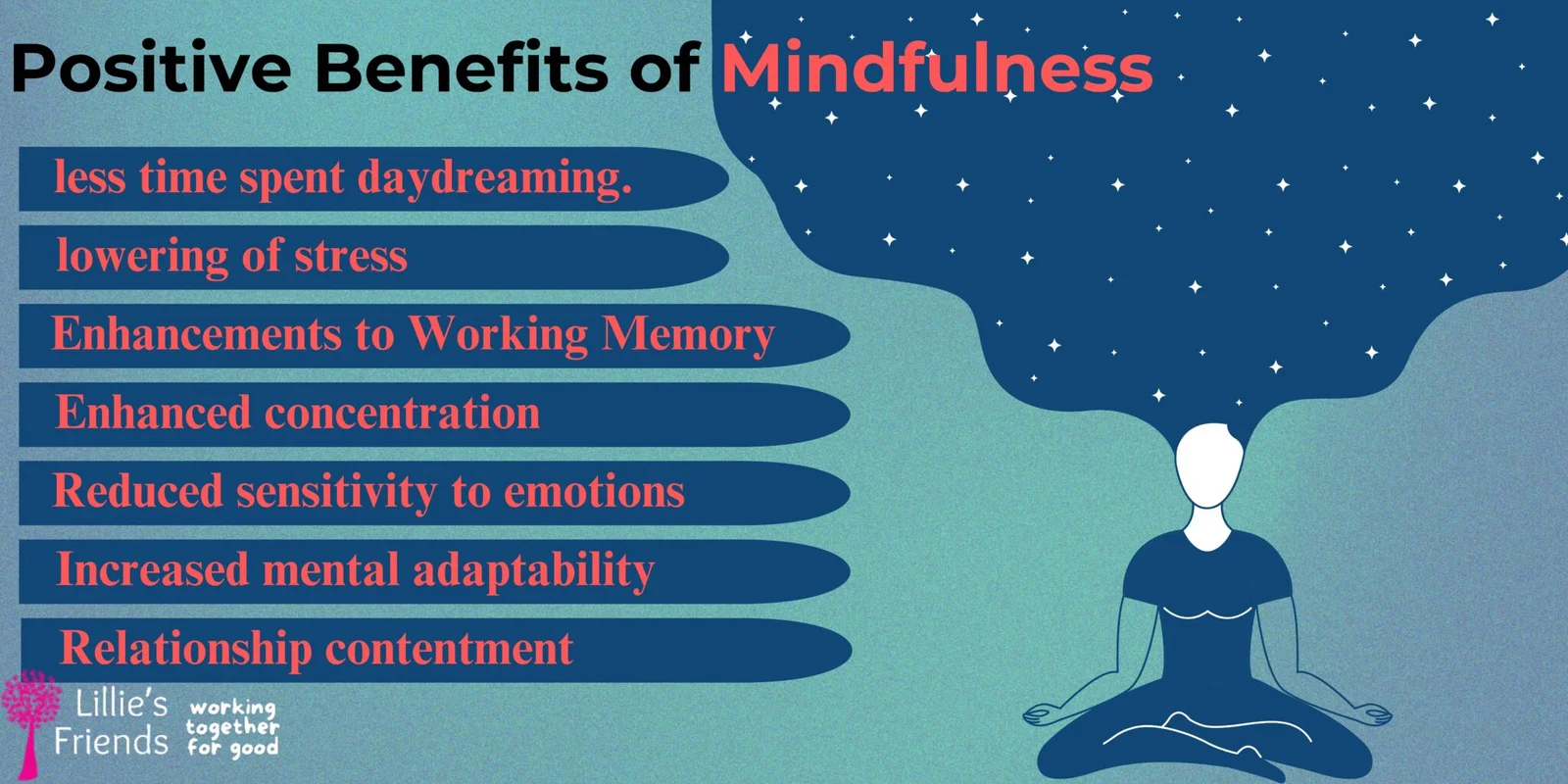
People may become the greatest versions of themselves and enhance their quality of life when they practice mindfulness regularly and correctly. It’s about the things that people focus on. The secret is to gently and compassionately shift emphasis to the present. In certain circumstances, particularly when treating depression and anxiety, mindfulness training may be a beneficial adjunct to psychotherapy. We invite you to contact us at your earliest convenience to explore how an integrated approach can help address your symptoms.