Evidence Based


 Updated on:
26.08.2025
Updated on:
26.08.2025
 6 min read
Knowing the importance of mental health has become essential at a time when stress and burnout are prevalent. Mental health days highlight the value of maintaining a healthy psychological and emotional condition, encourage self-care, and act as a beacon of self-awareness.
As a result, the idea of occasionally taking a day off for mental health has gained a lot of attention, and rightfully so. Let’s explore its definition, advantages, and telltale symptoms that it’s necessary.
In 1992, World Mental Health Day was established by the World Federation for Mental Health. It is now observed annually on October 10th and is now supported by the World Health Organisation. The day facilitates communication about mental health and helps people better grasp its significance. It gives everyone a break from mental and emotional stress and encourages them to take more care of their psychological well-being.
We frequently overlook the significance of mental health in our unrelenting pursuit of both personal and professional goals. Nonetheless, there are several advantages, both material and immaterial, to taking a moment to prioritise our mental health. The benefits of taking mental health days are examined in more detail below:
In the same way that our bodies display symptoms of physical exhaustion or disease, so do our brains when they are under stress or overwhelm. Let’s look at several important signs that indicate it could be time for you to take a day off for your mental health:
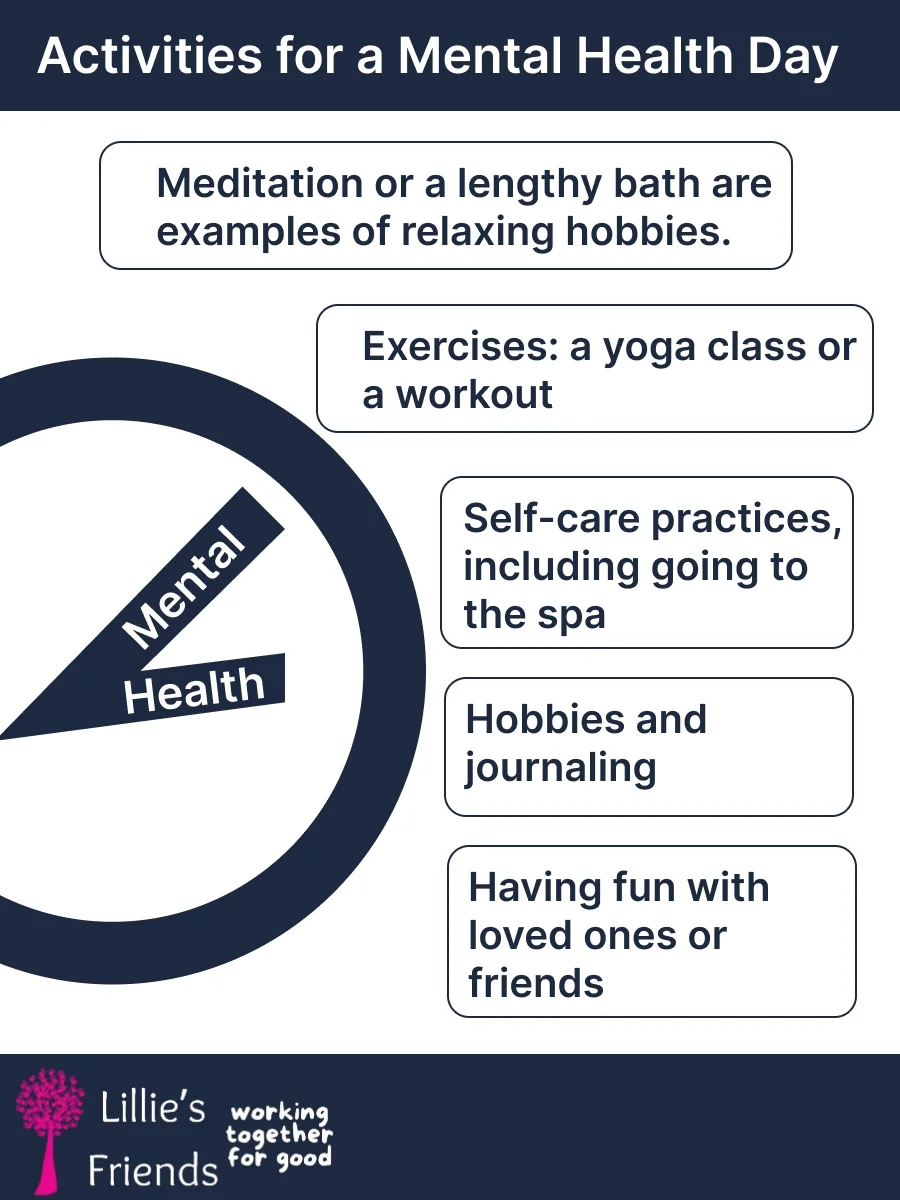
There is more to taking a mental health day than simply skipping work. It involves consciously choosing to put your mental health first. First, choose a day that will interfere with your job schedule as little as possible. Without feeling guilty, tell your boss why you need a day off for mental health reasons. Finally, schedule your day so that you may maximise your mental health respite. You can discover a number of useful suggestions below.
Meeting your psychological needs is the aim of a mental health day. Research examining several aspects of detachment discovered that physical detachment is associated with physical health, emotional detachment with emotional well-being, and cognitive detachment after work with cognitive health. You may customise your day in the following ways:
If taking a day off doesn’t make you feel less stressed or overwhelmed, it can be a sign of more serious mental health problems. In these situations:
The goal of World Mental Health Day is to increase public awareness of mental health concerns and rally support for mental health services worldwide. It acts as a reminder of our shared duty to promote a society in which everyone has access to the treatment they require and mental wellbeing is widely valued.

Listen to your body and mind to determine how many mental health days you need. This depends on your unique situation, stresses, and coping strategies. Determining the right frequency may be aided by self-checking frequently, keeping lines of communication open with employers, and paying attention to your health, including speaking with medical professionals.
It's acceptable to take a mental health day whenever you truly believe that you need one. The frequency varies depending on personal situations and workplaces. But if the need arises too frequently, it can be a sign of more serious underlying problems that call for longer-term care or expert assistance↗. It's critical to pay attention to your body and mind and strike a balance between obligations and self-care.
in certain organisations that understand the need of mental health days to prevent job-related stress, burnout, and other major negative consequences, a mental health day may be regarded as an excused leave from work. However, different workplaces have different rules and levels of acceptability when it comes to mental health days. To find out how your company feels about the issue, you must speak with your HR department or consult your employee handbook.
Mental health is just as essential as physical symptoms when it comes to a sick day. Prioritise your emotional well-being and give yourself the time you require to recuperate if you are experiencing mental overload or stress to the extent that it interferes with your capacity to work normally.
Be direct and truthful when requesting mental health leave from your employer. You may say, for instance, "I feel like I need to take a break because I've been feeling overburdened lately and I think it will help me be more productive and healthy overall." Could we talk about me taking a day off for mental health? You don't have to provide every detail, but do remember to talk about how to handle any pressing issues and business requirements while you're away.