Evidence Based


 Updated on:
29.08.2025
Updated on:
29.08.2025
 5 min read
One of the most common mental health issues in the world is depression. According to data from the Centers for Disease Control and Prevention (CDC), up to 4.7% of US adults consistently suffer from depression.
As difficult as managing the symptoms of this mood illness is, if treatment is not received, there is a chance that it might develop into chronic depression.
The concept of chronic depression, its symptoms, causes, and possible treatments will all be covered in this article’s summary of the illness.
One persistent and protracted manifestation of the illness is chronic depression. The two distinctive features of chronic depression are its prolonged duration and recurring nature, according to the definition. Although this illness is often referred to as dysthymia, persistent depressive disorder (PDD) is the clinical name for both dysthymia and chronic depressive disorder, according to the most recent text revision of the Diagnostic and Statistical Manual of Mental Disorders, Fifth Edition (DSM-5-TR).
A patient must experience symptoms for at least two years and not go more than two months without experiencing any symptoms to be diagnosed with dysthymic disorder . The symptoms of this type of depression are the only ones that last for so long. The disease typically manifests early in life. In contrast to major depressive disorder, the patients often have milder symptoms. Even yet, the illness has the potential to seriously impair a person’s relationships , employment, and spare time.
While they are less frequent and less severe, the symptoms of major depressive disorder and chronic depression are comparable. Among them are:
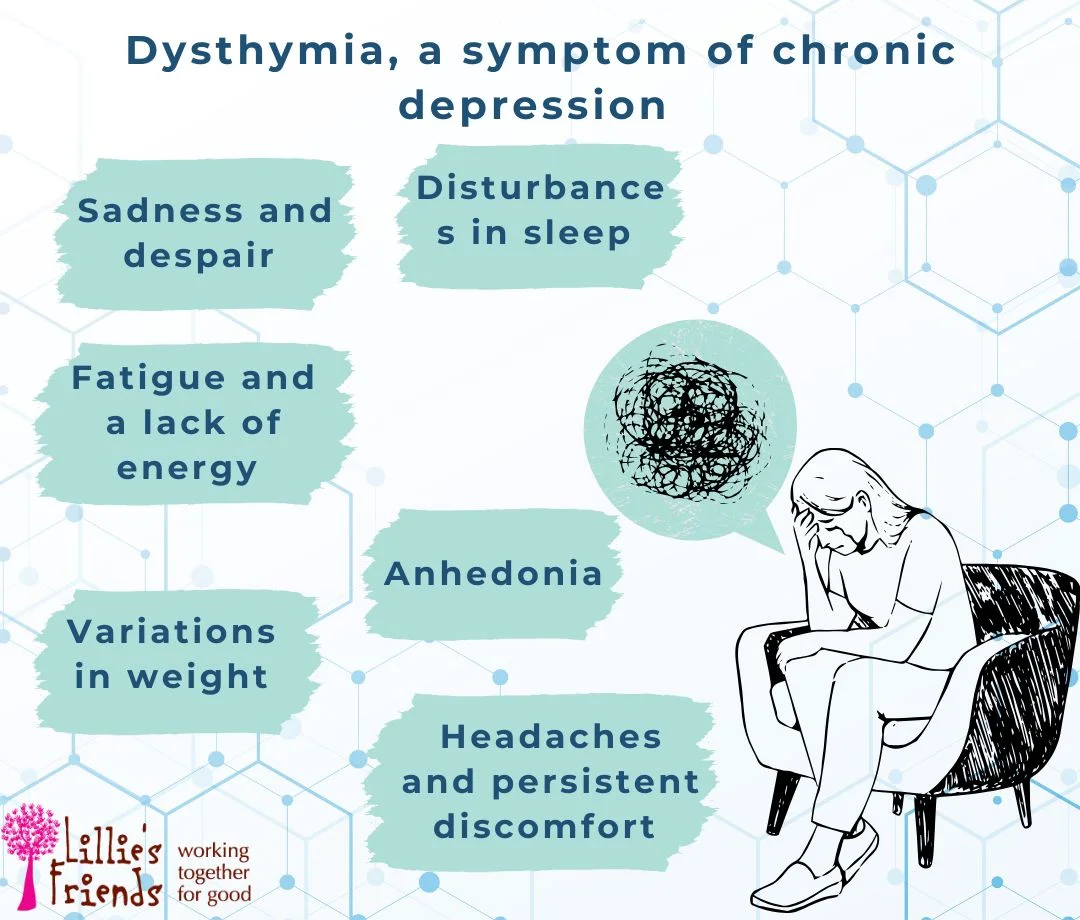
Chronic depression has no one cause. Nonetheless, specialists have discovered connections with a number of elements and circumstances, chief among them being
Like other types of depression, persistent depressive disorder is treated in a similar manner. Each patient’s needs should always guide the course of treatment, which might involve:
The first-line treatments include medication and counseling. Furthermore, it is frequently more successful to combine the two strategies.
When chronic depression first appears, it may be simple to put off seeking medical help, particularly if it appears to be moderate persistent depressive illness. The illness is not always severe, and there may be cycles of varying degrees of severity. As a result, it might be simple to accept it as a natural aspect of the patient, or they can believe they are improving and decide not to seek medical attention. That shouldn’t be the case because it can lead to a lifetime of depression, aggravate existing health conditions, and negatively impact one’s quality of life.