Evidence Based


 Updated on:
18.08.2025
Updated on:
18.08.2025
 10 min read
Highlights
It may surprise you to learn that almost two out of ten people who see their family doctor say they have palpitations or feel their heartbeat strangely.
It’s upsetting to notice that your heart is beating oddly, and you’re curious as to what caused it. Is your heart okay, or are you just stressed ? We will discuss these legitimate worries in this post.
Absolutely, anxiety can cause palpitations, and they frequently happen together. Anxiety typically causes heart palpitations, but it can also have the opposite effect. People may become upset and anxious when they experience an irregular heartbeat.
Heart palpitations brought on by anxiety can occur in a matter of minutes.
This phenomenon occurs because anxiety activates the autonomic nervous system. That may sound complex, but in reality, it’s a part of the nervous system that operates automatically under stress; you cannot consciously control it, and it functions without your awareness. The outcome is the fight-or-flight response, which you have probably heard about.
One of the signs of this stress reaction is palpitations, which can manifest as a pounding or racing heart.
The following list includes additional physical signs and symptoms that might manifest if anxiety is the cause of heart palpitations:
Fear is the primary factor. Your body and brain want you to flee during the fight-or-flight response brought on by anxiety, so your muscles must contract! They require oxygen as fuel to become active rapidly. The body’s automatic response causes your heart to beat more quickly to transport oxygen to the necessary location, and your breathing will increase oxygen levels. Heart rhythm abnormalities may occur whenever your heart rate abruptly increases.
These variations in rhythm—you don’t have to keep this in mind—are known as tachyarrhythmias or extrasystoles .
Anxiety-related or other causes of heart palpitations may feel like:
Actually, a mix of the aforementioned bodily sensations may cause anxiety-induced heart palpitations.
According to one study, palpitations brought on by a heart rhythm disorder can occur in as many as 67% of people who suffer from mental health conditions like depression, panic attacks, and generalized anxiety disorders.
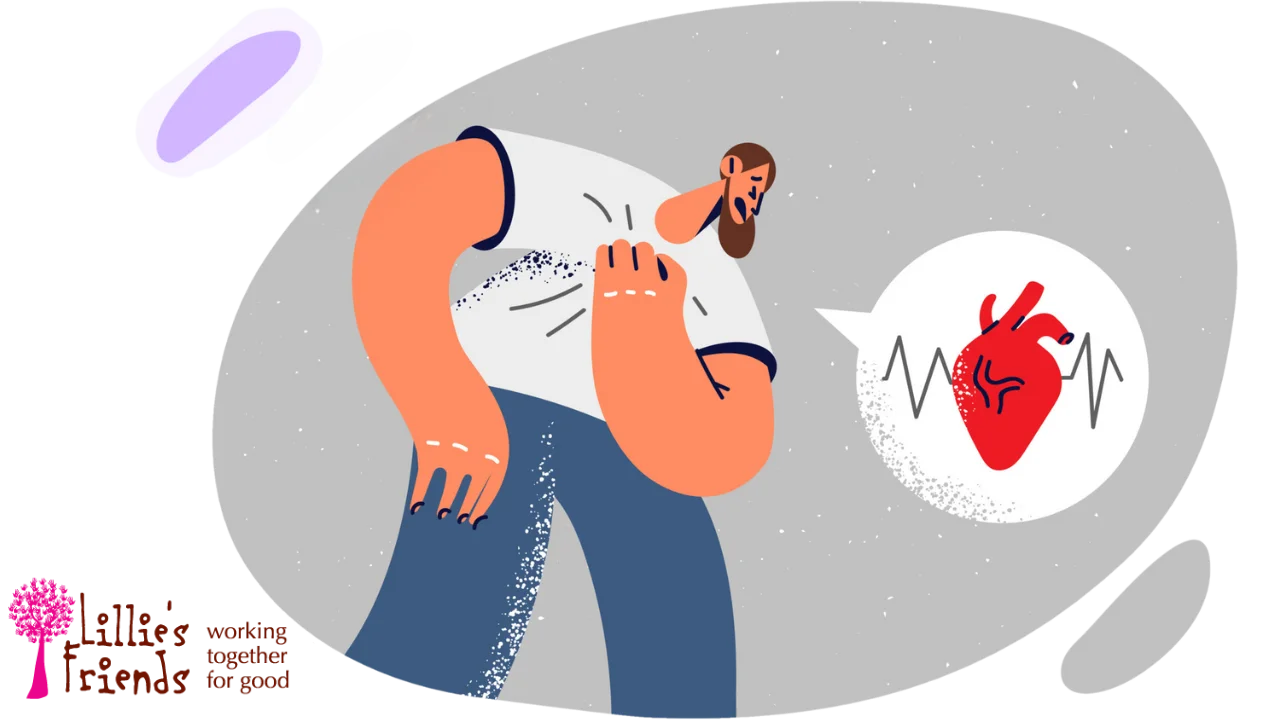
In addition to being an indication of anxiety, palpitations may also be a normal reaction in specific circumstances or a sign of underlying medical disorders. We provide a list of common causes below, but there are many more.
States of high output:
Conditions related to metabolism:
Foods and drugs:
Elevated adrenaline:
Mental health issues:
Heart conditions:
Heart disease is the primary cause of 43% of palpitations, with mental health disorders accounting for 31% of cases. To get prompt assistance, speak with a healthcare professional if heart palpitations are bothering you.
A-fib, also known as atrial fibrillation , is one of the heart rhythm abnormalities that can result in palpitations.
It traditionally results in an irregular heartbeat. This indicates that the A-fib heart rate can be either fast or normal and that the strength of each beat varies in addition to the time between them. Because it increases the risk of stroke and may indicate underlying heart disease, A-fib is a serious condition.
A Holter monitor, a device that records a person’s heart patterns over a few days, is the only way to diagnose atrial fibrillation, even though many patients feel fine. Unlike A-fib palpitations , which may not have a clear trigger and can be irregular, anxiety-related palpitations typically occur quickly and rhythmically along with feelings of stress, anxiety, worry, or fear. You may experience lightheadedness, flushing, or perspiration; nausea; and dyspnea in both conditions.
These descriptions are general and meant to inform; if you have any troubling symptoms, see a clinician.
You should always see a doctor to rule out heart disease as a cause of heart palpitations because it is the cause of The following are reasons to visit the ER since they may point to potentially fatal underlying causes:
Importantly, keep in mind that you need to see a doctor immediately for two reasons if you are having palpitations for the first time and don’t have a recognized cause :
Therefore, your healthcare provider can advise you on a suitable treatment plan after confirming the diagnosis of anxiety.
There are a few things you can try right now if you are experiencing heart palpitations and an anxiety attack.
Understanding these techniques is especially crucial when you experience this at night, when it’s even more frightening because it’s quiet, you can’t be distracted, and palpitations usually feel worse when you’re lying down, particularly on your left side.
Here are some tips for preventing anxiety-related heart palpitations at night or during the day.
1. Take your mind off your heart and divert it. You can accomplish this by
2. Reduce your heart rate.
You might be able to calm your heart palpitations and anxiety by stimulating the parasympathetic nervous system.
Deep breathing exercises ↗ are effective for this; the 4-4-4-4, or box, technique is the simplest to recall. Initiate a four-second inhalation, pause for four seconds, exhale for four seconds, pause for four seconds, and repeat this cycle four times.
3. Obtain assistance
Call a friend or relative, or wake up your partner and discuss the situation with them.
Call a healthcare professional for advice or visit the emergency room if the palpitations don’t stop within a few minutes or if you begin to have any of the worrisome symptoms listed in the previous section.
First and foremost, altering your lifestyle to lessen anxiety should be your top priority. For instance, consider implementing the strategies outlined below.
You can lower the flight response by using daily relaxation techniques ↗. This can include engaging in any enjoyable and calming activity, like gardening or listening to music, but additional tactics include
Body scan relaxation: begin at your toes and work your way up the body, focusing on relaxing the muscles and joints in each area as you go. Finish with the face and neck.
By using your imagination and visualization, temporarily put yourself in a state of contentment and serenity.
Engaging in physical activity is great for heart and mind health. Exercising for 20 minutes, three times a week, at roughly 75% of your maximum heart rate can reduce anxiety ↗. Using the following formula, you can easily determine the heart rate you must achieve during the exercise:
(220 minus your age) times 75, then dividing by 100
Furthermore, research suggests that yoga, even for just one hour per week, can effectively treat anxiety and depression when combined with medicine and counseling.
Always get your doctor’s approval before beginning cardiovascular exercise, particularly if you have ever had palpitations.
Anxiety and palpitations are two of the negative effects of caffeine, a strong stimulant of the nervous system ↗. Therefore, it is imperative that you abstain from caffeine if you are experiencing palpitations linked to anxiety.
Eliminate alcohol from your life because, while it may momentarily calm you by elevating feel-good dopamine and serotonin, anxiety and depression can return once the effects wear off.
Limit Your Use of Mobile Devices
Your anxiety may be exacerbated by mobile devices ↗ by:
Although modern life would be nearly impossible without these gadgets, make every effort to minimize their use.
In the end, lowering fear might prevent palpitations and the activation of the flight response. This can be accomplished using
Finally, your healthcare provider may determine that medication is necessary as part of your customized treatment plan. Anxiety medications can alleviate heart palpitations if a mental health condition is the cause.
When treating anxiety disorders over an extended period of time, selective serotonin reuptake inhibitors (SSRIs) are typically the first-line option ↗. They usually take a few weeks to start working, though.
Your doctor might suggest short-term, faster-acting medication options in the interim. While you wait for the SSRIs to start working, they may help lower anxiety and palpitations. Examples of these include beta-blockers and benzodiazepines. The decision is very personal and is based on the patient’s medical history and symptoms.
In conclusion, heart palpitations may indicate anxiety and stress. You cannot, however, presume that it is the sole underlying cause. Seeing your clinician and ruling out physical conditions are crucial.
Prioritizing mental health is necessary if it appears to be a contributing factor to this symptom. One of our medical professionals will perform an evaluation and create a customized treatment plan when you schedule an appointment at Lillie’s Friends.