Evidence Based


 Updated on:
25.08.2025
Updated on:
25.08.2025
 16 min read
[medical_disclaimer title=”Medical Disclaimer”]The medicines listed on this website are only there to give you knowledge. Just because they are on the list doesn’t mean that anyone will be given them; in the end, treatment decisions are up to the healthcare workers. The medicines on this list are not all of them. Doctors may recommend other drugs, even ones that don’t contain stimulants, depending on the patient’s specific health needs and circumstances.[/medical_disclaimer]
In order to help patients with ADHD (attention deficit hyperactivity disorder) better focus, attention, and impulse control, Adderall is frequently recommended. Because it is a regulated substance, it can only be obtained with a prescription. It’s not a one-size-fits-all process to determine the right Adderall dosage. A physician will closely assess the patient’s needs, medical history, specific Adderall formulation, and symptoms. This in-depth guide will teach you about typical and maximum dosages, show you how to read the XR peak chart, and provide you with other useful information.
A prescription drug called Adderall is a member of the central nervous system (CNS) stimulant class. It is frequently used to treat narcolepsy and attention-deficit/hyperactivity disorder (ADHD). Amphetamine and dextroamphetamine sulphate are the two active components in this medicine.
The primary goal of Adderall is to improve and control particular neurotransmitters , such as norepinephrine and dopamine, as well as increase their availability in the brain. These neurotransmitters are essential for regulating attention, focus, and impulse control . Medication therefore aids in improving focus, reining in impulsive behaviour, and extending periods of concentration for those with signs of ADHD. Additionally, it might lessen distractibility and increase productivity, which would enhance academic and professional performance.
Adderall and Adderall XR are two distinct versions of the same medication, Adderall. Each has special qualities and applications. While Adderall XR is an extended-release variant, Adderall is available as an immediate-release form.
The patient’s reaction to the medication and lifestyle requirements are among the factors that go into choosing between Adderall and Adderall XR. A physician will also take into account the patient’s preferences, convenience, and the amount of time required to manage symptoms. Additionally, available formats and doses are considered.
| Standards | Adderall | Adderall XR |
| Strength | 5 mg, 7.5 mg, 10 mg, 12.5 mg, 15 mg, 20 mg, 30 mg | 5 mg, 10 mg, 15 mg, 20 mg, 25 mg, 30 mg |
| Form | Tablets | Capsules |
| frequency of intake | taken multiple times daily | One daily dose |
The Adderall dose decision can be influenced by a number of things. Here are a few of them:
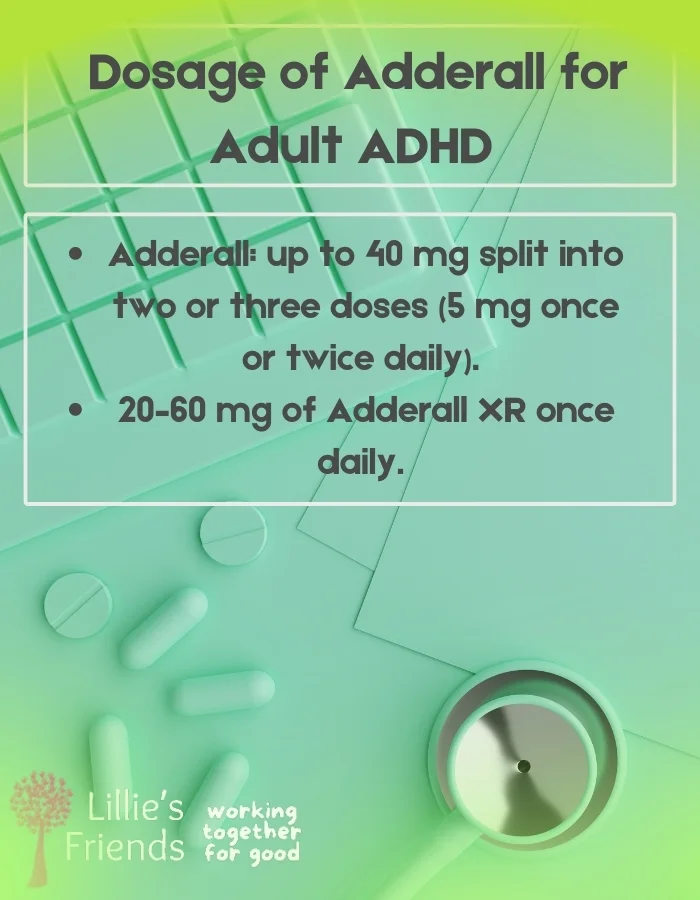
Since Adderall is a drug that is under government oversight, it’s critical to follow your doctor’s instructions to ensure safe usage. Patients should not adjust the dosage without first speaking with their physician. This is a summary of common dose ranges and suggested intakes.
|
Significance |
Recommended starting dosage
|
Sustaining dosage
|
Dosage threshold
|
|
Adderall (immediate-release) |
|||
|
ADHD |
5 mg once or twice daily |
20 mg to 40 mg per day, divided into two or three doses. |
Not specific |
|
Narcolepsy |
10 mg daily |
10-60 mg per day in divided doses |
Not specific |
|
Adderall XR (extended-release) |
|||
|
ADHD |
20 mg once daily in the morning is the starting dosage for adults. |
20 mg to 60 mg daily, taken once daily in the morning. |
Not specific |
The dosages and formulations of several ADHD drugs differ. A patient’s age, weight, the severity of their symptoms, and the prescription in question are some of the factors that determine the appropriate dosage for them. Here is a brief comparison of the recommended dosage ranges for common ADHD medications.
Other stimulant drugs likewise cause the central nervous system to become more active, which heightens energy, alertness, and focus. These medications cause a rise in blood pressure, heart rate, attention, and euphoria, among other effects via stimulating brain activity. These are a few stimulant drugs that are recommended for ADHD .
|
Medicine name
|
Adult therapeutic dosage range
|
|
|
Methylphenidate (Ritalin, Concerta) |
Ritalin tablets with immediate release: two to three dosages per day, divided between 20 and 60 mg, is the safe dosage range.
|
Formulations with extended release (Metadate CD, Ritalin LA, Concertta): Doses once daily vary from 18 to 72 milligrammes. |
|
Dexmethylphenidate (Focalin) |
Doses for immediate-release tablets: 2.5 mg to 10 mg, given twice a day.
|
Extended-release capsules (Focalin XR): once daily dosages usually fall between 10 and 40 mg.
|
|
Lisdexamfetamine (Vyvanse) |
— |
Capsules: Once daily in the morning, dosages ranging from 30 mg to 70 mg are administered. |
For the treatment of ADHD, non-stimulant drugs are also utilised. Despite functioning differently from stimulants such as Adderall, these medications have the ability to manage symptoms. Different dosages are needed depending on which non-stimulant medication is being used. These are some commonly prescribed non-stimulant medications, along with an average dosage for each.
|
Drug name |
Adult therapeutic dosage range | |
|
Starting dose |
Maximum dose |
|
|
Atomoxetine (Strattera ) |
Adults typically start off with 40 mg per day. |
Subject to response and tolerability, the dose may be increased gradually up to an adult’s daily limit of 100 mg. |
| Guanfacine (Intuniv ) | The first dose is normally taken orally, usually around bedtime, and is 1 mg per day. | Depending on how each person responds, the dosage can be gradually increased up to a maximum of 4 mg per day. |
| Clonidine (Kapvay ) |
0.1 mg twice a day is the typical dosage.
|
Up to a maximum of 0.4 mg per day, the dose can be raised as needed.. |
Given that Adderall comes in a variety of forms, strengths, and dosage guidelines, patients should heed the customized advice provided in their prescription. It’s also a good idea to prepare notes and ask all the questions you have regarding taking this drug at your appointment.
Some general advice to consider when taking Adderall is as follows:
Remember that this is only basic information, and that you should consult a healthcare professional for specific instructions tailored to your particular medical history and present condition. Concerns about safety, interactions between drugs, appropriate dosage, and contraindications can all be addressed by them.
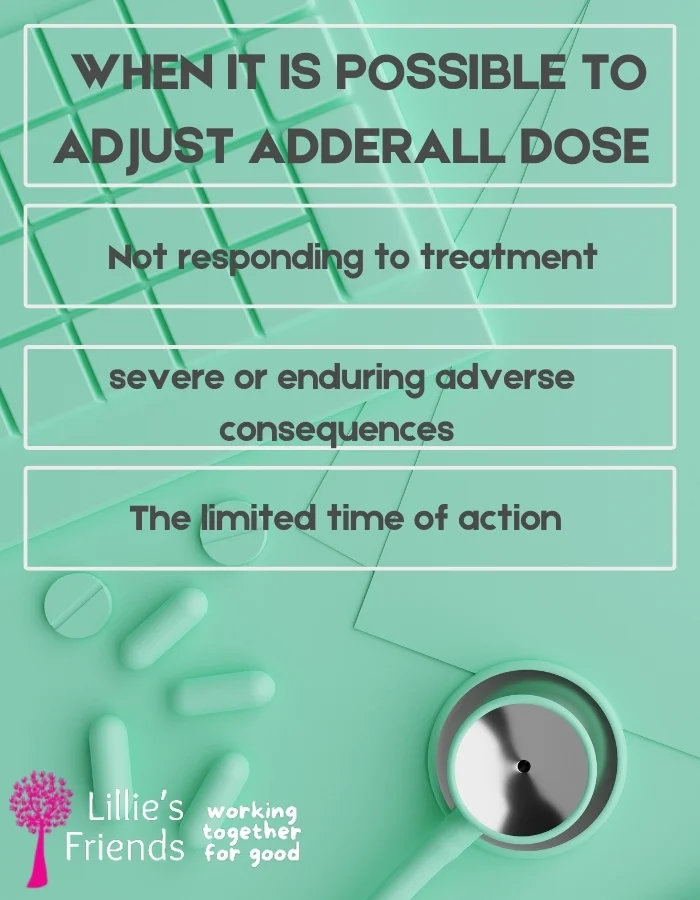
Occasionally, the Adderall dosage that was first selected needs to be adjusted. It may occur if the dosage is too high, too low, or ineffective for the patient in question. At follow-up appointments, these elements are evaluated by a healthcare provider. The following variables may come into play when deciding how to change the dosage in order to effectively treat symptoms and reduce side effects.
It’s crucial to arrange regular follow-up appointments with the physician in order to assess the dosage’s ongoing effectiveness. Adjustments may be required over time due to changes in the person’s condition, age (in the case of children and teenagers), or other situations. Regular reevaluation helps ensure that the suggested dose remains effective.
Maintaining open channels of contact with the medical professional is also crucial. Regular check-ins will allow evaluation of the effectiveness of the prescribed dose, identification of any probable adverse effects, and assessment of inadequate symptom control. Determining if a dosage adjustment is necessary can be aided by feedback regarding the medication’s effects.
It can be difficult to determine if your dosage is too low; a healthcare provider should carefully evaluate your situation. A few indicators, nevertheless, can indicate that your present Adderall dosage is too high.
Here are a few possible signs:
Adderall misuse can result from taking excessive amounts of medication in one day or over an extended period of time. On the other hand, a person’s tolerance, weight, and general health can all influence the quantity that becomes misused or an overdose. It’s critical to adhere to the recommended dosage and any directions given by a medical practitioner. Overdosing can occur when a person takes more than is advised.
The following are some signs of an overdose:
It should be noted that going over the suggested maximum dose may raise your risk of experiencing certain side effects, such as anxiety, sleeplessness, high blood pressure, elevated heart rate, and other possibly dangerous consequences.
If you think you may have taken too much Adderall, you need to see a doctor right once. Furthermore, it is advised to occasionally stop giving medication and assess whether the behavioral symptom improvements are adequate or call for longer-term therapy. As far as medication overdose is concerned, caution is always advised.
To receive assistance if you think someone may have taken too much Adderall, call the emergency number (911 in the US). Inform the operator that you think someone may have overdosed on Adderall and give them any relevant information. Tell the emergency staff whatever you know about the patient’s condition, the amount of Adderall they took, or any other pertinent details. In a situation like this, they can offer the appropriate medical guidance. Until the emergency crew arrives to take over the patient, heed their instructions.
Adderall can have some annoying side effects, just like any other medicine. The degree and probability of these adverse effects can be affected by the Adderall dosage. Although the effect may vary from person to person, higher Adderall dosages generally have a higher likelihood of side effects than lower dosages. A few of the side effects are as follows:
In summary, determining the appropriate Adderall dosage is a challenging process that requires careful consideration of each patient’s unique response and circumstances. In order to evaluate your particular case, taking into account your age, medical history, and any underlying issues, it is imperative that you consult with a competent medical practitioner. Even though Adderall can be highly beneficial in treating ADHD, it must be used carefully and sensibly as overuse or misuse can have serious negative effects on one’s health. To optimize the advantages and minimize any potential risks, it is imperative to identify the appropriate dosage under medical supervision.

When taking medication, it is usually recommended to take it as soon as possible after missing a dose. It is advisable to stick to your regular dosing schedule if your next planned dose is approaching. The likelihood of adverse effects can rise when a double dose is taken to make up for a missed one.
The ideal Adderall dosage varies from person to person and depends on factors such as age, weight, medical conditions, and unique response to the medication. Typically, the prescription doctor will start with the lowest effective dose and increase it gradually while keeping an eye on your response and any adverse effects. If you have any concerns, talk to your healthcare practitioner about the dosage of your medicine.
For Adderall immediate-release tablets, a dosage of 5 mg to 40 mg should be taken two or three times a day. On the basis of your particular demands and health, your healthcare provider should determine the appropriate dosage of Adderall for you. You must take the medication as prescribed by your doctor in order to guarantee safe and efficient use.
With your doctor's help, you can design an Adderall schedule that suits your needs. Usually, Adderall is taken in the morning to avoid interfering with sleep. Depending on the formulation (e.g., immediate-release or extended-release) and your particular situation, the exact dose frequency and timing will change. It's imperative that you follow the suggested schedule exactly and don't change it without first seeing your physician.
When using Adderall, make sure you follow your doctor's instructions and those on the prescription label to guarantee the right dosage. Adderall is often taken orally, with or without meals, and it's frequently advised to take it first thing in the morning. Unless directed otherwise, it is imperative that the entire tablet be swallowed; it should not be chewed, crushed, or broken. If you are unsure about how to take your prescription, speak with your doctor.
The duration of Adderall's effects varies depending on their makeup. While Adderall immediate-release variants typically last 4 to 6 hours, extended-release versions can last up to 12 hours. Recall that the medicine might remain in your system long after the symptoms subside. The exact amount of time varies depending on the type of drug test, individual differences, and metabolism. It's advisable to discuss any concerns you may have with your doctor, particularly if they pertain to drug testing or the adverse effects of Adderall.