Evidence Based


 Updated on:
29.08.2025
Updated on:
29.08.2025
 7 min read
[medical_disclaimer title=”Medical Disclaimer”]The medicines listed on this website are only there to give you knowledge. Just because they are on the list doesn’t mean that anyone will be given them; in the end, treatment decisions are up to the healthcare workers. The medicines on this list are not all of them. Doctors may recommend other drugs, even ones that don’t contain stimulants, depending on the patient’s specific health needs and circumstances.[/medical_disclaimer]
Lexapro, escitalopram, treats depression and generalized anxiety disorder. Like any drug, it may produce negative effects. Most are moderate and transient, but others are severe and long-lasting. This page discusses Lexapro’s frequent and unusual adverse effects and variables that might worsen or prevent them.
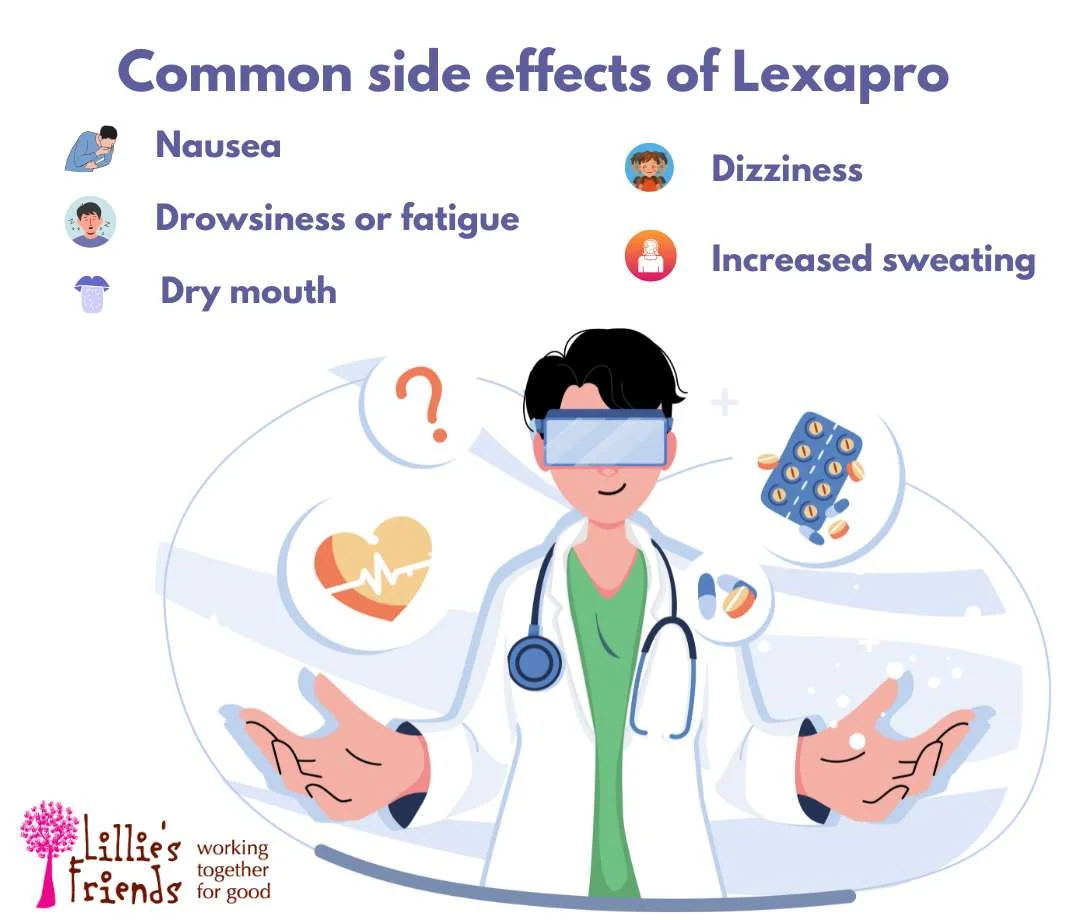
The main Lexapro side effects are:
Mild and transitory symptoms seldom require medical attention. Most individuals may tolerate them without major side effects after the first week as their bodies adjust to the medicine. However, see your doctor if Lexapro side effects continue and create substantial concern.
The depression drug Lexapro can potentially produce serious side effects . If you notice any, please inform your doctor promptly. This includes:
Lexapro, like other SSRIs, may cause side effects in people using it for anxiety or depression . Headaches, nausea, dry mouth, muscular soreness, insomnia, and sexual dysfunction are common. As the body adjusts to the drug, these adverse effects may fade.
Lexapro is not recommended for children under 12. It may be advised for 12–17-year-olds with serious depression. Escitalopram increases the risk of suicide in young people; thus, they must be monitored.
Lexapro dangers and advantages during pregnancy must be considered. Studies imply that late-pregnancy SSRIs like Lexapro may cause infant problems such as chronic pulmonary hypertension. As Lexapro goes into breast milk, it may affect breastfed infants.
Lexapro side effects and medication interactions may be more likely among those with a history of substance use disorders, especially alcohol or CNS depressants. These situations may demand attentive monitoring.
Lexapro may interact with antipsychotics, painkillers, antidepressants, and herbal supplements. Patients using additional medications must inform their doctor.
People with various medical issues may be more susceptible to Lexapro side effects. In those with a history of bleeding problems, SSRIs may increase the risk of unusual bleeding. SSRIs alone may not treat bipolar illness, causing mood swings or manic episodes.
Lexapro should not be taken when:
Sudden Lexapro discontinuation might produce agitation, headache, nausea, flu-like symptoms, and dizziness. Its pain is generally temporary but may necessitate medical attention. Medical specialists recommend tapering off the drug gradually under their supervision to reduce withdrawal symptoms.
Different factors affect side effec t duration and intensity, including:
Discuss any concerns or side effects of Lexapro with your doctor or pharmacist so they can determine the best course of action.
Contact your doctor if Lexapro causes persistent or serious adverse effects . This includes:
Your doctor may change your prescription, suggest alternate therapies, or give supportive care. Side effects must be managed with open discussion with your doctor.
Lexapro (escitalopram) side effects can be prevented in numerous ways:
Lexapro helps cure anxiety and depression, but it has adverse effects. Knowing the risks helps you prepare for and manage them. If Lexapro causes substantial discomfort or other issues, talk to your doctor.

Alcohol can worsen Lexapro side effects including sleepiness and dizziness, so avoid it. Lexapro may interact with other antidepressants and other drugs, so consult your doctor before using them.
Any person who has had a strong allergic response to escitalopram or other SSRIs should not use Lexapro. If you have a history of seizures, bipolar disorder, liver, kidney, or blood diseases, notify your doctor. Another drug may be advised in these cases
Lexapro side effects vary in length and severity. Some side symptoms may disappear in a few weeks as your body adjusts to the medicine, but others may require medical attention.
The optimal Lexapro time depends on your tastes and circumstances. Those who have difficulties sleeping may choose to take Lexapro in the morning, while others prefer to take it at night.Discuss the information with your doctor for specific advice.
Lexapro may cause headaches, nausea, or anxiety. They usually disappear as your body adjusts to the drug.
Lexapro side effects usually improve or disappear as your body adjusts to the drug. Each person reacts differently to medicine, and certain side effects may persist or require medical treatment.
Symptoms may improve in a few weeks or take many weeks to fully appear.It's important to monitor symptoms and stick to your treatment plan.