Evidence Based


 Updated on:
06.08.2025
Updated on:
06.08.2025
 6 min read
Humans evolved to feel anxiety to prepare for dangers and protect themselves. Although some nervousness is typical in stressful settings, anxiety disorders [1*] worsen these sensations. These problems impair everyday life and well-being beyond typical worries. This article discusses anxiety disorders and associated symptoms.
Humans evolved to feel anxiety to prepare for dangers and protect themselves. Although some nervousness is typical in stressful settings, anxiety disorders worsen these sensations. These problems impair everyday life and well-being beyond typical worries. This article discusses anxiety disorders and associated symptoms.
Anxiety disorders cause intense anxiety, concern, or dread that impairs daily life. But each illness has its own symptoms. Common DSM-5 anxiety disorders are listed below.
GAD is characterized by excessive life anxiety. These concerns may include employment, health, family, or daily life. GAD causes difficult-to-manage anxiety and symptoms like
Unexpected and frequent panic episodes describe panic disorder. They entail abrupt fear or pain. Symptoms include:
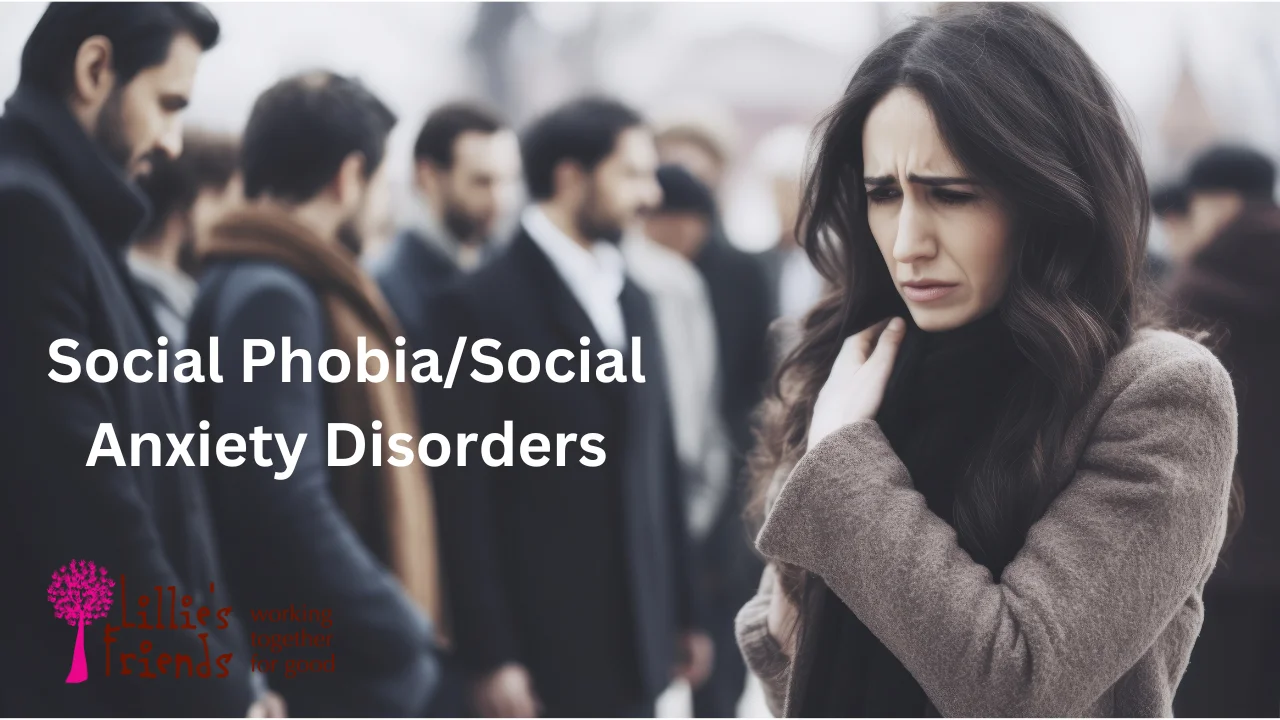
The hallmark of social anxiety disorder is a profound dread of social settings. Another fear that someone might have is of being scrutinized or receiving a bad evaluation. Individuals who have social anxiety may worry about:
Avoidance behavior may result from these anxieties. A person may also become nervous that other people may see their bodily signs of nervousness , such flushing or sweating.
An intense and unfounded dread of anything in particular, such as heights, spiders, flying, or medical procedures, is known as a specific phobia. It is upsetting when avoidance behavior results from extreme dread. When in the scenario or around the trigger item, an individual might feel
Another name for illness anxiety disorder is hypochondria or hypochondriasis. This disorder is characterized by a person’s dread of becoming unwell or having a serious medical condition. They might misinterpret regular body functions for signs of illness. Typical signs of anxiety in disease include:
Agoraphobia is the fear and avoidance of difficult exits. In the event of panic-like or other embarrassing or crippling symptoms, a person may avoid places where help is unavailable. A patient may fear public transportation or crowds. One may fear being alone outside her home.
Being apart from important people causes worry in anybody who suffers from separation anxiety disorder. In youngsters, the emotion lasts for a minimum of four weeks, whereas in adults, it lasts for six months. The person’s dread of being alone is excessive for their age and gets in the way of their everyday life. A person suffering from separation anxiety disorder may have nightmares about being apart from their loved one, be scared of losing them, or refuse to leave the home or spend the night without them.
Selective mutism often manifests before the age of five; however, it could go undiagnosed until the kid enters school. Children with this disorder speak effectively in familiar contexts but poorly in formal social settings like school. Speaking less may have negative effects, such as
Selective mutism is a disease that many children outgrow, and it may also disappear in those who also have concomitant social anxiety disorder. However, symptoms might sometimes last until maturity.
Anxiety has many characteristics in common with a number of different disorders, including post-traumatic stress disorder (PTSD) and obsessive-compulsive disorder (OCD ). Even though every condition is unique, there may be commonalities in the underlying causes, experiences, and symptoms.
Chronic OCD is a mental condition characterized by recurrent, upsetting thoughts called obsessions and repeated behaviors called compulsions that are brought on by the obsessions. These feelings and behaviors may be upsetting, time-consuming, and significantly interfere with day-to-day activities. One example of an obsession or compulsion would be someone who cleans everything repeatedly out of fear of germs or illnesses. An additional example would be a need for order and symmetry.
After going through or witnessing a terrible incident, a person may subsequently have post-traumatic stress disorder. It may impact individuals at all ages and is often associated with encounters with violence, war, accidents, natural disasters, or any other event that puts one’s life in danger.
Signs:
Excoriation condition, often known as skin-picking disorder, is characterized by compulsive skin picking that damages skin tissue. It is often diagnosed as body-focused repetitive behavior disorder (BFRB). Among the symptoms are
The intense need to pull out hair, which causes mental discomfort and hair loss, is the hallmark of trichotillomania. Skin-picking and other body-focused repetitive behaviors (BFRB) are characteristics of this disorder. One of the symptoms is the obsessive pulling of hair in reaction to stress or worry.
Anxiety is a broad category of complicated mental health issues that may have a significant influence on day-to-day functioning. Each kind of anxiety condition has different difficulties and needs different care . It’s important to realize that anxiety disorders are not just a symptom of weakness but also actual medical conditions.

Various physical and psychological signs are indicative of anxiety attacks. The most typical ones consist of
a profound sense of impending disaster or dread.
palpitations or a faster pulse rate.
a feeling of being unable to breathe or choking.
Both predicted and unexpected anxiety episodes are possible. Anticipated anxiety or panic episodes indicate that the sufferer is aware of the triggers, which may include specific circumstances or items. Conversely, unexpected panic episodes seem to have no apparent cause, yet there probably is one; however, it could be difficult to pinpoint.
A sizable percentage of people suffer from anxiety problems. The two of them are regarded as quite uncommon, nevertheless. Hypochondria, or illness anxiety disorder, affects a mere 0.1% of the US population. Additionally, 1-2% of people have selective mutism.
There isn’t a set structure for classifying anxiety into phases. On the other hand, anxiety may be classified as mild, moderate, severe, or panic-level anxiety based on how it affects daily functioning.
In this class, generalized anxiety disorder (GAD) is the most common kind. It is characterized by excessive and ongoing concern about many aspects of life, including jobs, health, family, and day-to-day affairs.
The Diagnostic and Statistical Manual of Mental Disorders, Fifth Edition, classifies anxiety as a mental health condition and labels it as an “anxiety disorder.”
In addition to being a mental disease, anxiety is a condition. It includes a broader spectrum of disorders that influence a person’s thoughts, emotions, and actions, therefore impairing functioning and causing suffering.