Evidence Based


 Updated on:
29.08.2025
Updated on:
29.08.2025
 9 min read
[medical_disclaimer title=”Medical Disclaimer”]The medicines listed on this website are only there to give you knowledge. Just because they are on the list doesn’t mean that anyone will be given them; in the end, treatment decisions are up to the healthcare workers. The medicines on this list are not all of them. Doctors may recommend other drugs, even ones that don’t contain stimulants, depending on the patient’s specific health needs and circumstances.[/medical_disclaimer]
For many years, benzodiazepines have been the focus of both public and medical concern. The Centers for Disease Control and Prevention (CDC) estimate that over 92 million benzodiazepine prescriptions were written in the US in 2019 alone But there are hazards associated with its extensive usage as well, such as dependency and a number of adverse consequences.
Benzodiazepines are a crucial topic for discussion because of the balance between their possible advantages and disadvantages. Continue reading to learn about the common kinds, applications, and hazards of benzodiazepines.
The family of psychoactive medications known as benzodiazepines, or “benzos,” affects the central nervous system. They have a variety of effects, including as drowsiness, relaxation, and decreased anxiety. Because of the possibility of dependency, tolerance, and other negative side effects, benzodiazepines are typically not advised for long-term therapy, even if they may be useful for the short term in treating certain diseases including anxiety , sleeplessness, and seizures.
Because benzodiazepines are available in a variety of formulations and have varying durations of action , they can be used to treat a range of medical conditions. Here are a few varieties that are frequently prescribed:
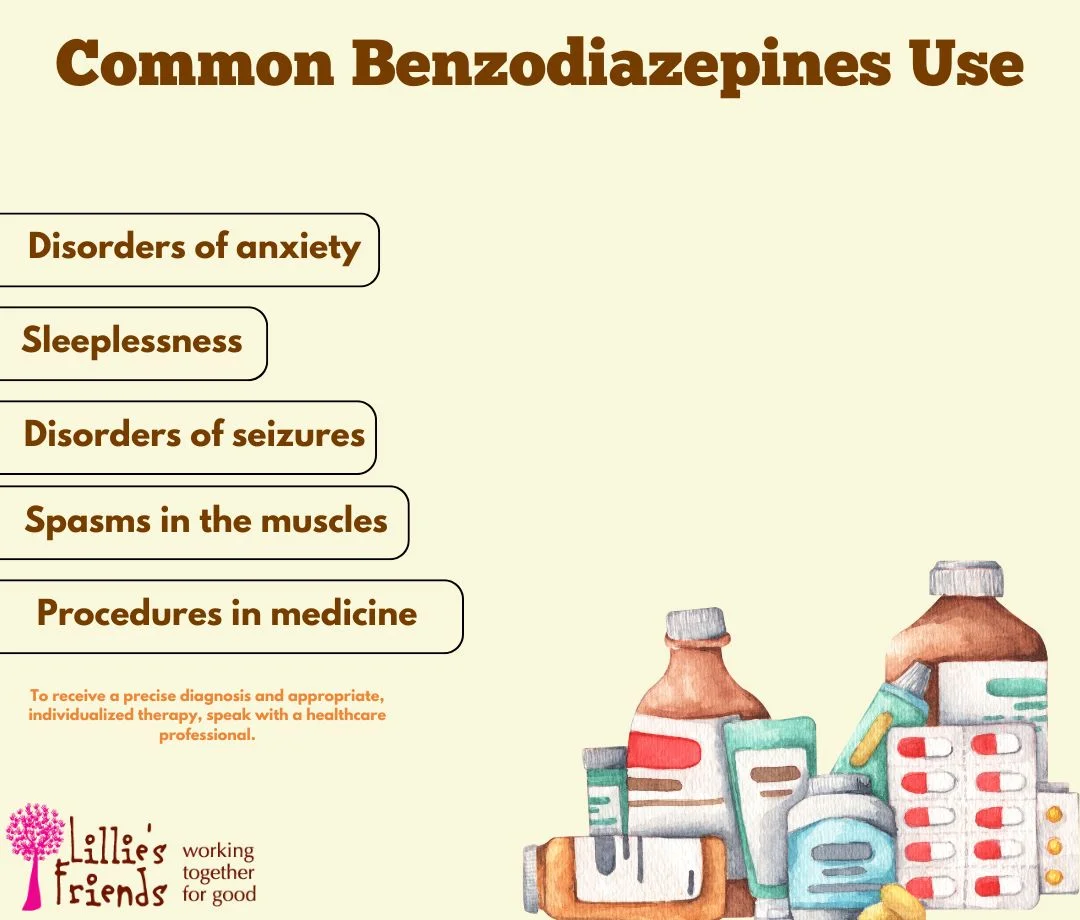
Benzodiazepines have anticonvulsant, muscle relaxant, sleep-inducing, and anti-anxiety effects. As a result, the following ailments are commonly treated with them:
Given its potential for addiction, benzodiazepines may be carefully evaluated as part of a larger depression therapy strategy for those who are also suffering anxiety.
Benzodiazepines mainly function by amplifying the effects of gamma-aminobutyric acid (GABA), a neurotransmitter that is essential for reducing brain activity . Benzodiazepines can intensify the actions of GABA, leading to a variety of sedative, anxiolytic (anti-anxiety), and anticonvulsant effects. Because of this mechanism, benzodiazepines are useful in the treatment of disorders such as muscular spasms, anxiety, sleeplessness, and seizures.
Although benzodiazepines include certain hazards, such as tolerance, dependency, and misuse potential, they also provide a number of important benefits.
Even while benzodiazepines can be quite helpful, it’s vital to be mindful of the possible negative effects that could result from using them. The frequency and severity of these side effects might vary, so it’s important to speak with a healthcare professional for individualized medical advice. Some of the adverse effects are listed here, divided into significant and common categories.
| Common side effects | Serious side effects |
|
|
Benzodiazepine overdose can be a dangerous and even fatal circumstance. Overdose symptoms might include:
Risk elements:
In the event of an overdose, prompt medical intervention is essential. As soon as you suspect an overdose, contact emergency services or visit the closest emergency facility.
With prolonged usage, benzodiazepine dependency can develop, resulting in a physical and psychological reliance on the drug. Withdrawal symptoms, including increased anxiety, sleeplessness, and, in extreme situations, seizures, may arise if the medicine is stopped suddenly.
Because benzodiazepine tolerance can occur somewhat fast, higher dosages could be needed over an extended period of time to have the same therapeutic benefit. A vicious cycle of dose increases may result from this, raising the possibility of dependency and other negative consequences.
Medical supervision is the most effective method of managing benzodiazepine tolerance and dependency. To safely lower the dosage, your doctor could suggest a gradual tapering regimen.
Research indicates that 20% of benzodiazepine usage results in abuse, which can take many different forms:
Overdose, dependency, and a plethora of other mental and physical health issues are just a few of the detrimental effects that misuse may cause.
The most frequent conditions for which benzodiazepines are given include muscular spasms, seizures, sleeplessness, and anxiety disorders . They are occasionally used as a premedication for medical operations or as a temporary remedy for severe stress. However, these drugs are often not advised for the long-term treatment of chronic illnesses because of the possibility of dependency.
Before prescribing benzodiazepines, doctors take into account several criteria, such as your medical history, the severity of your ailment, and any other drugs you may be on. Particularly for long-term management, they could choose other therapies, such as additional medications, including cognitive-behavioral therapy for sleeplessness or SSRIs for anxiety disorders.
There are hazards and difficulties associated with using benzodiazepines during pregnancy and lactation, such as low birth weight, and cleft palate.
Because benzodiazepines are secreted in breast milk and can impair the nursing infant, moms who are breastfeeding their babies should also be cautious. It is important to consult a healthcare provider in both cases for a personalized risk assessment and to explore alternative treatment options .
Think about possible drug interactions with other prescriptions when using benzodiazepines, such as:
Giving your doctor a complete list of all the prescriptions you use, including over-the-counter pharmaceuticals and herbal supplements, is critical. With this knowledge, they will be more equipped to decide if adding prescription benzodiazepines to your treatment strategy is safe and effective.
For a variety of medical conditions, including anxiety, sleeplessness, etc., benzodiazepines provide a powerful remedy. However, concerns include dependency, overdose possibility, and adverse effects offset their usefulness. When benzodiazepines are taken with other drugs or in situations like pregnancy, more caution is necessary. Benzodiazepine medications should thus be used under strict medical supervision and are often best used for short-term therapy.

The symptoms of anxiety disorders, panic attacks, sleeplessness, and occasionally seizures or muscular spasms are all treated with benzodiazepines. They can also be utilized for sedative-related medical operations.
The most prevalent conditions for which benzodiazepines are prescribed include anxiety disorders, sleep problems, and some types of seizures. In the United States, older persons may have higher prescription rates[15*] for illnesses including anxiety and sleeplessness, and their use might differ by demography.
If you have a history of substance misuse, are pregnant or nursing, or have certain medical conditions, such as severe respiratory problems, you should not take benzodiazepines. Additionally, these pharmaceuticals may combine with alcohol and other substances, resulting in harmful adverse effects.
Avoiding alcohol and grapefruit or grapefruit juice while using benzodiazepines is typically suggested since these substances can interact with the drug and raise the risk of side effects such respiratory depression, severe sleepiness, or decreased motor function. For individualized advice, always seek the advice of your healthcare provider.
The length of time that benzodiazepines can be used varies depending on the patient and the ailment being treated. Because of worries over tolerance and reliance, they are usually recommended for brief periods of time (a few weeks to a few months). Under close monitoring, some people may stay on them for a longer period of time. Regarding the length of therapy, always heed the advice of your healthcare practitioner.
Slower response times, decreased coordination, and sleepiness are all side effects of benzodiazepines. Driving or operating heavy machinery should normally be avoided until you are familiar with the side effects of these drugs. They may also have an impact on your capacity to carry out certain duties at work. Always get advice from your healthcare practitioner and heed any cautions on labels.