Evidence Based


 Updated on:
28.08.2025
Updated on:
28.08.2025
 6 min read
[medical_disclaimer title=”Medical Disclaimer”]The medicines listed on this website are only there to give you knowledge. Just because they are on the list doesn’t mean that anyone will be given them; in the end, treatment decisions are up to the healthcare workers. The medicines on this list are not all of them. Doctors may recommend other drugs, even ones that don’t contain stimulants, depending on the patient’s specific health needs and circumstances.[/medical_disclaimer]
A wide range of pharmaceuticals are classified as anti-anxiety meds. They can be used for both short-term and long-term therapy, depending on how severe and persistent the symptoms are. Certain medications can be addictive, and even when they improve a person’s health, they may also have negative impacts and other consequences.
Perhaps you’re not sure if taking anxiety drugs is the best course of action. Read the most current blog post to find out if anxiety medications are addictive or not.
These medications are intended to calm the body’s neurological system, which combats anxiety. Therefore, prolonged use of some anxiety medications (anxiolytics, also known as light tranquilizers) changes the structure of the brain, increasing tolerance and the risk of addiction.
Compared to other anxiety medications, some are more likely to cause habit formation and addiction. Benzodiazepines, for example, are medications used to treat severe anxiety and panic attacks. Compared to people using alternative anxiety medications, individuals who use benzodiazepines are at a significantly higher risk of developing an addiction . There may be a propensity to take more medicine to have the intended effects if benzodiazepines are not taken as prescribed and the patient is not feeling the required effects.
Benzos increase the effects of gamma-aminobutyric acid (GABA), a neurotransmitter that slows down the central nervous system. This method produces calming, peaceful effects that help people feel less anxious. Benzodiazepines are generally seen to be safe and beneficial in the short term, but if used improperly, they can eventually become a habit.
Please reach out to your doctor promptly if you suspect you might be developing an addiction to your anxiety medication.
Although there are many other types of anti-anxiety drugs, the ones listed here are some of the most commonly prescribed and misused. Because they start working quickly—usually offering relief in 30 to 90 minutes—they are sometimes referred to as fast-acting anxiety drugs.
Some signs of an addiction to anxiety medications include the following:
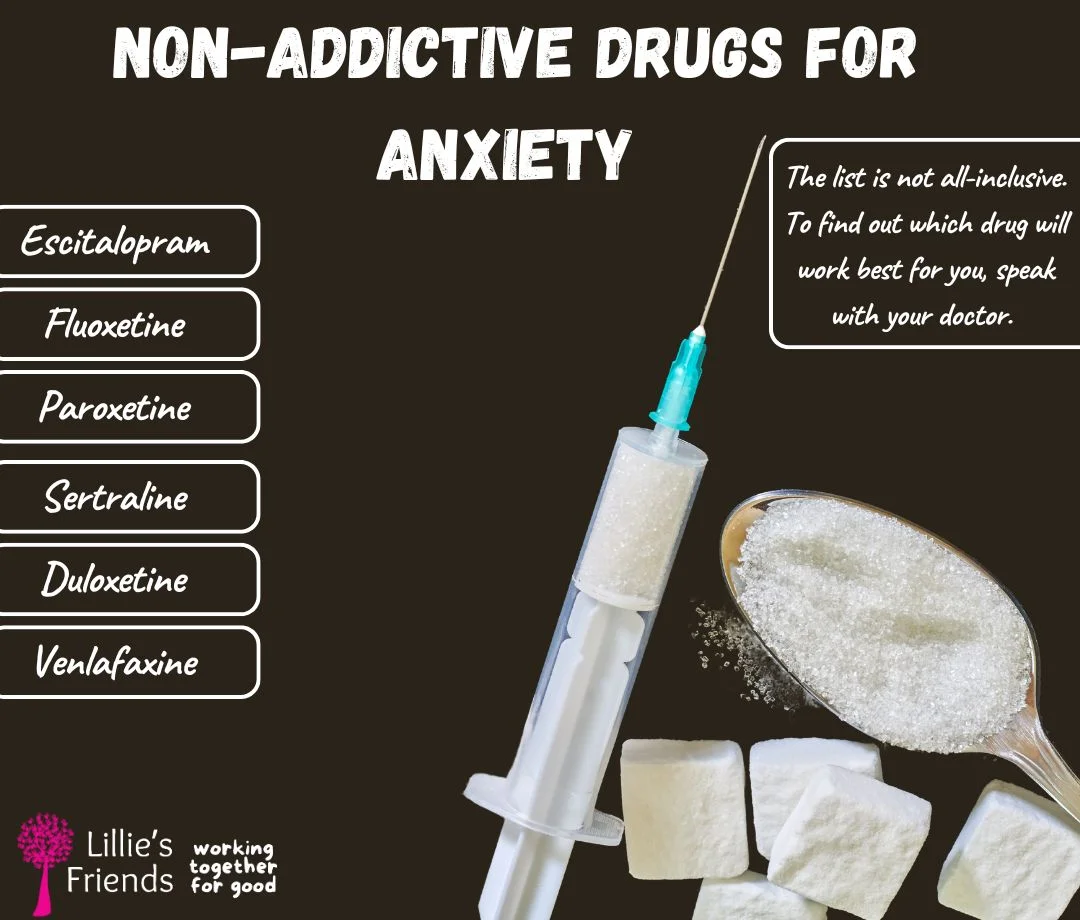
Because they don’t produce euphoria, certain effective anti-anxiety medications don’t have the potential to become addicted. The following anxiety drugs are among the alternatives to benzodiazepines that have a lower potential for addiction:
Addiction is a problem with several anxiety drugs. You can get the right care to overcome anxiety, regardless of the signs of addiction or pharmaceutical usage.